
Salvia superba ‘Giovanni’: a herbaceous perennial 30-60cm H with multiple stems of purple flowers in Spring. Plant in a sunny position.
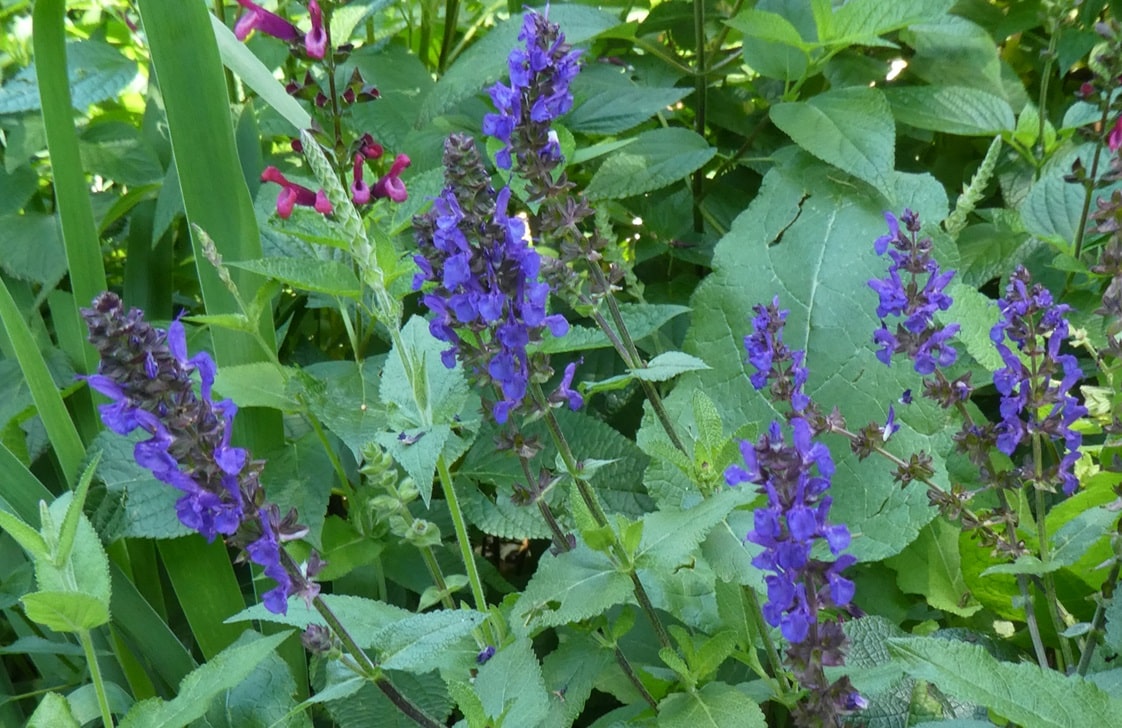
Salvia ‘Giovanni’ is a robust small plant , ideal for as a border plant along a path.
Flowers : are a falcate type with all lobes being purple. Sometimes depending on the light they look a mixture of blue/ purple. All flowers are fairly small.
The hood is straight with the lower middle lobe being cupped and the 2 side lobes being tucked in nicely. There are faint markings in the throat area, acting as a beeline to guide bees and other pollinating insects further into the corolla.
Flowers are in whorls of 6 flowers around a green stem, with 3 on each side of the stem.
Flower heads are compact and on average approx. 10- 12 cm long, having stems approx. 20-30cm high, most stems are branched with one to two side stems growing well above the foliage, to attract passing pollinating insects.
After the plant emerges in early spring, energy is used to make a clump of rosette leaves before sending up flower spikes.
Calyces: are primarily green with darker ribbing, giving them a khaki colouring. each lobe is ribbed with a blunt point. These will remain on the stem after the flower has dropped, becoming a straw colour until the seed is collected or they are knocked off leaving just a stem.
Leaves: are long, slender, mid green, lanceolate with a textured surface and a pointed tip. Fine rounded crenulations are found around the edges. The longer leaves of the clump are found at the base around the outside with smaller, new leaves appearing in the centre.
All flower stems have sessile leaves at the base of branching and very few bracts remaining after the flowers have opened.
|
|
|
|
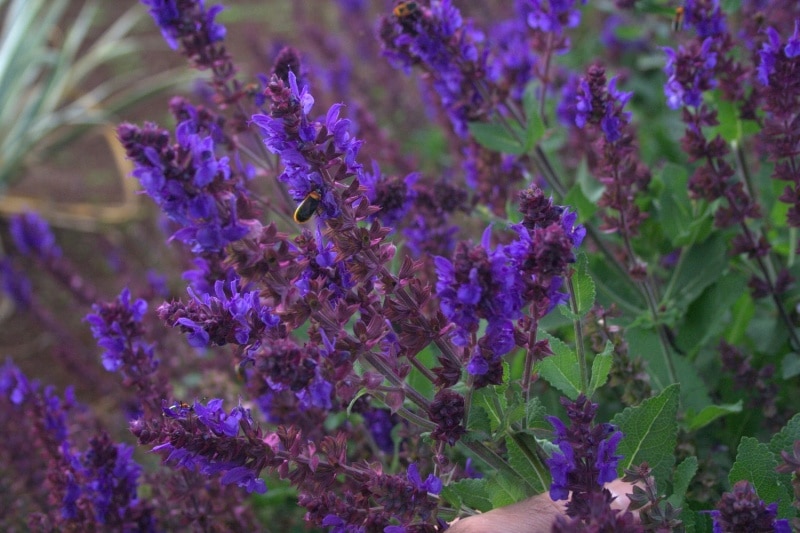
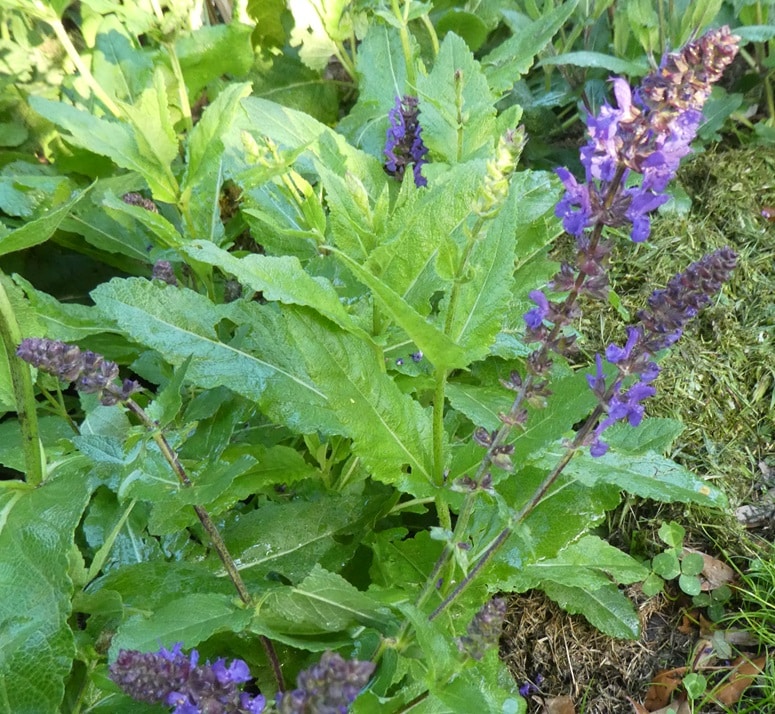
Salvia ‘Giovanni is perfect as a border plant either on it’s own or in a mixed border. As it produces a number of prolific flower stems, the purple flower heads certainly make a statement and draw the eye.
Plant with other small shrubs and perennials. Pinks, whites, pale blues and bright yellows all contrast nicely with these purple flowers.
Grow in a sunny position, not fussed with soil, so long as it’s free draining and protected against hot winds in summer. They will appreciate some extra watering when the season is hot and dry. Mulch well to keep the root area cool in the hot summer season.
Once establish, this plant can be tough and hardy for the summer season, producing a wonderful crop of purple flowers that will delight.
Maintenance: This plant needs very little maintenance, but watch for snails, slugs and rabbits when the leaves are emerging. The best idea is either net the emerging growth or spray with a “Eco Snail and Slug” spray, they don’t particularly like the smell or the taste.
When the plant is ready to go down for winter, clean away old leaves but keep one or two flower stems or have a marker next to the crown, it’s not accidentally dug up or trodden upon.. Mulch well in cold districts in winter to keep the crown warm. Feed well just before the leaves emerge and feed again when the flower stems begin to emerge. Feed again when in flower to keep the plant flowering.
When ready, collect seed and dead head to promote more flowers.
Propagation: Mainly from seed sown in late winter with heat. Cuttings can be taken when the leaf stems have 2-3 nodes and placed in propagating mix. If the clump is large enough, then it can be divided and any stems without roots be used as cuttings. All this can be done in early spring before the flower stems get toooo long.
Not readily available