
Salvia suberba x ‘Rubin’: is a herbaceous perennial, forms a clump of rosette basal leaves and spires of cerise flowers in Spring. Plant in full sun.
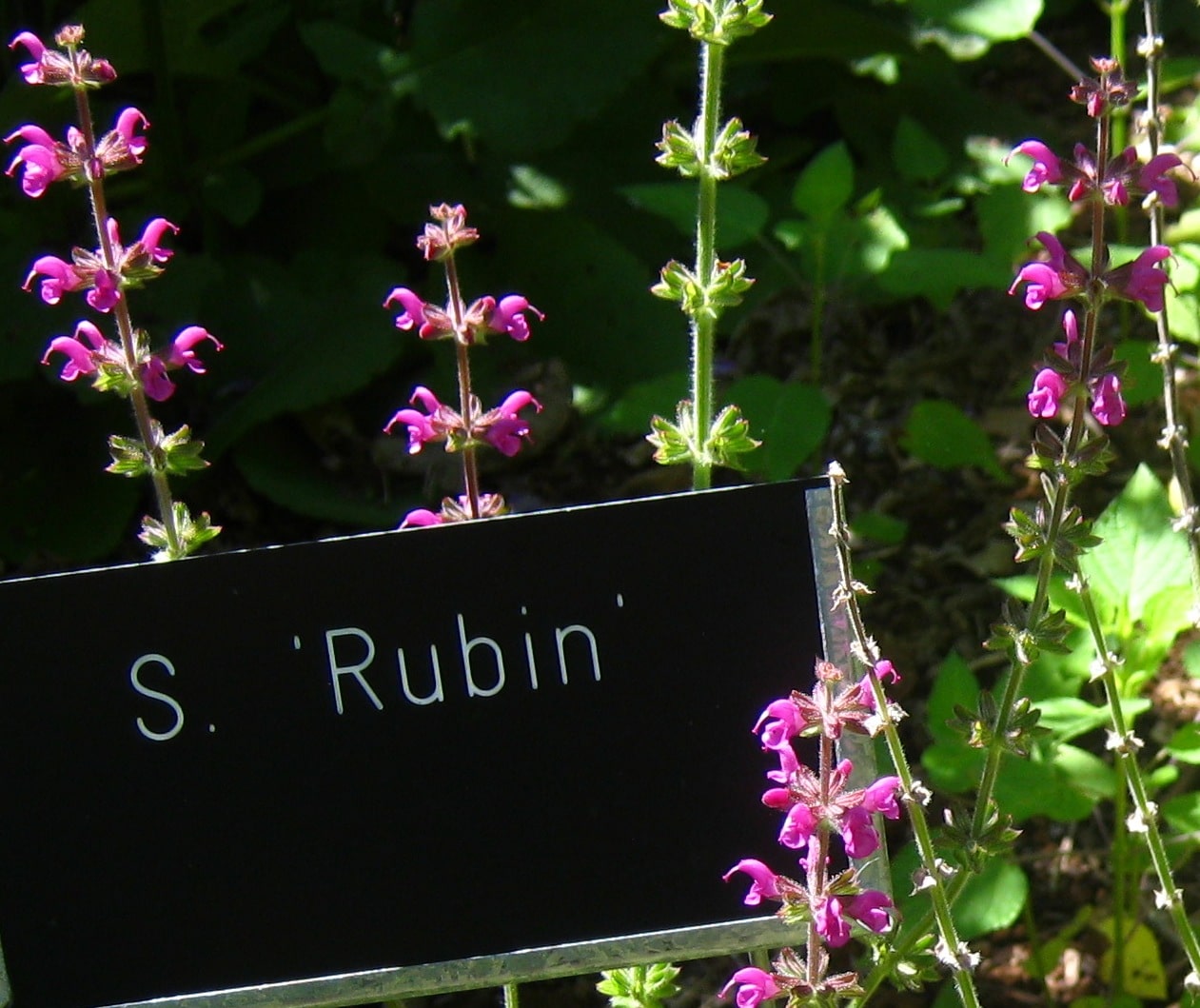
‘Rubin’ as a herbaceous Salvia is winter dormant, coming up quickly in September/ October to form a clump of basal lobed leaves before sending up long spires of cerise flowering stems often 30-40cmH. A wonderful sight of masses of cerise flowers.
Flowers: are small and cerise in a falcate style. The hood is curved and quite fat with the stigma being well exerted.The bottom lobes are the same colour, with the 2 side lobes being tucked in nicely adding the middle lobe which is cupped – to hold a drop of dew and act as a landing place for bees ans other pollinating insects.
Those flowers that have been visited by bees, show with the bottom lobe no longer cupped but hanging down which tells the bees – ‘Don’t bother, already visited’. There is a small pale marking around the throat to act as a beeline which helps to guide the insect further into the corolla.
Flowers are in regular whorls of 6 flowers, 3 on each side, around a green or slightly coloured stem. Most of the stem is covered by flowers having only a short stem of leaves.
Flowering stems appear in mid spring, after the plant has formed it’s clump of rosette leaves. Multiple flower stems are produced, often attaining 30-40cmH, being well above the foliage to attract passing insects.
Calyces: these are generally green, but can begin to colour when facing the sun. Each lobe is ribbed, hairy with a small curved point. If the flowers are not pollinated, the calyces will drop off, leaving a bare flower stem.
Leaves: these are bright green, broad and lobed – one of the few varieties that have lobed leaves. The texture is slightly rugose, allowing any moisture to be channeled down the stem towards the roots. Petioles are short, concentrating on the broad leaf. Small sessile leaves are found beneath the beginning of the whorls on the flowering stems. Any bracts that were present when the flowers were in bud have quickly fallen off when the flowers opened.
|
|
|
|
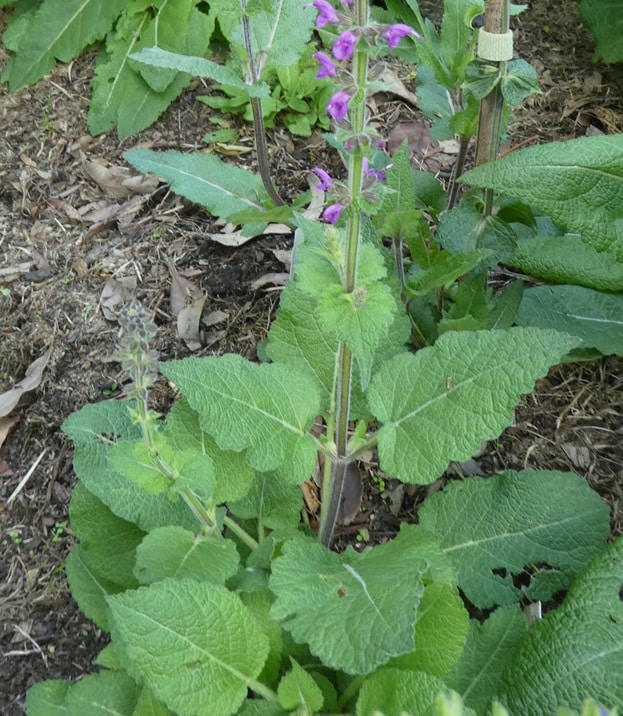
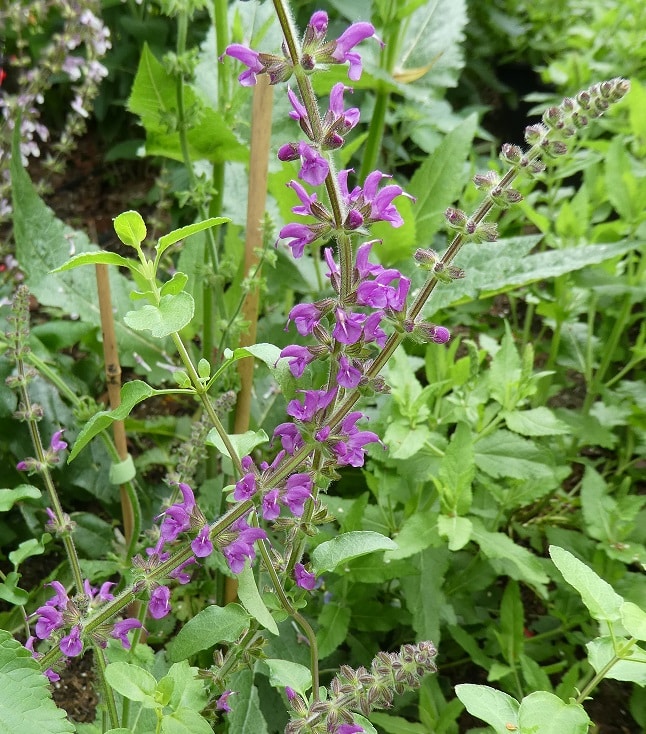
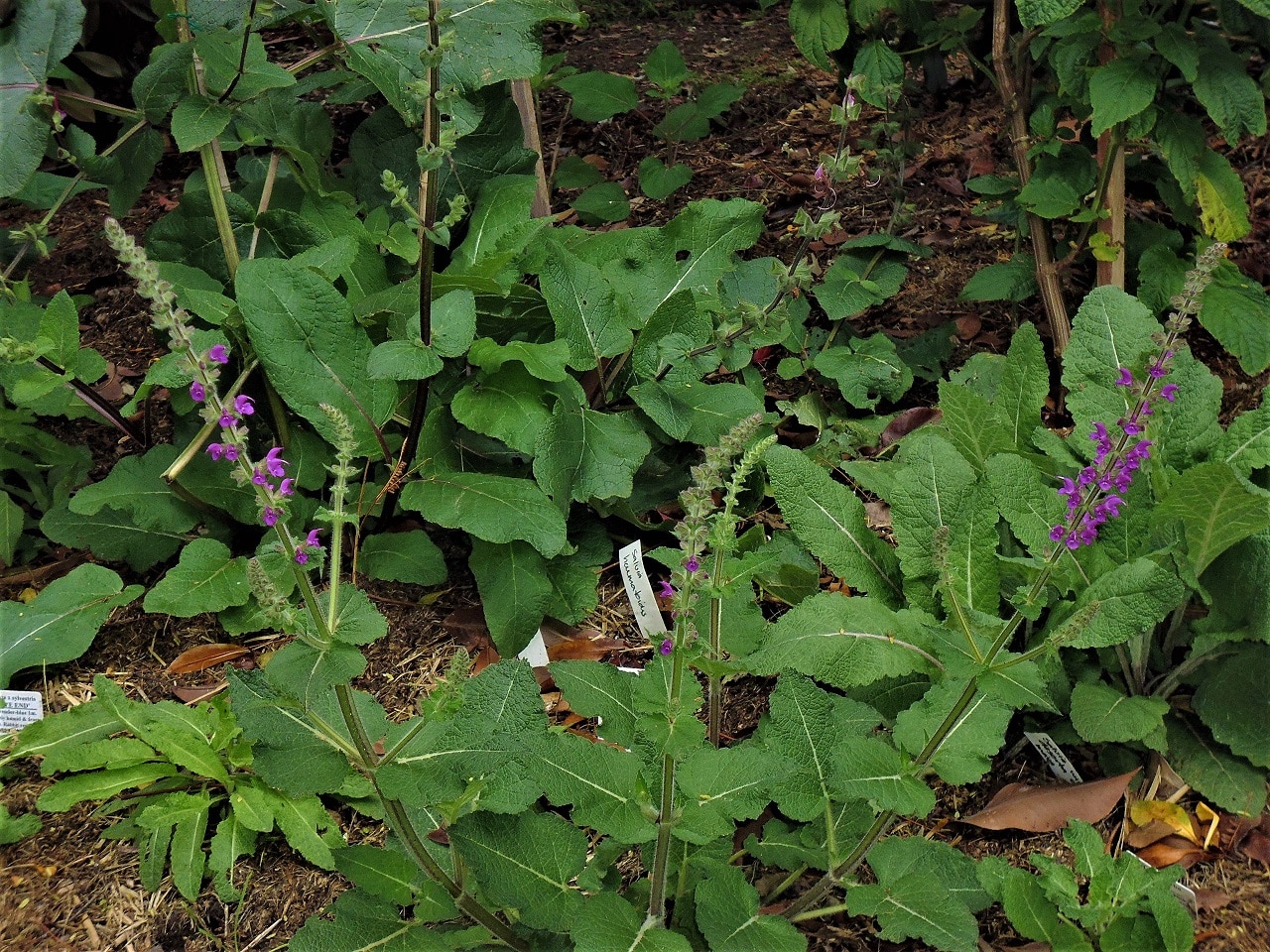
‘Rubin’ is a joy to have in the garden, especially if mass planted to have a sea of cerise spires and elegant , neat clump of leaves.
Liking full sun, plant with similar herbaceous perennials or other small subshrubs and groundcovers in contrasting colours of white, pale blues and pinks. These colours will bring out the beauty of ‘Rubin’s’ lovely cerise flower stems.
Not fussed with soil, but must be free draining, once established these plants can be quite hardy over the summer season, making a perfect plant for bordering a path or within a mixed border, or growing en masse.
Maintenance: As this is winter dormant, and a neat and tidy clump, there is very little maintenance, except to clean away old leaves. Mulch the plant through out the year, mulching in winter over the crown in cold areas to keep the crown warm and mulch in summer to keep the root area cool during the hot dry season. When mulching during the winter months, mark the crowns to prevent treading upon or accidentally digging up.
Feed with a good fertiliser at the end of winter/ beginning of spring to nourish the newly emerging leaves. Keep feeding through out the season but especially just as the flower stems are appearing.
Propagation: Being herbaceous, seed is mostly used, being sown at the end of winter for plants ready for the upcoming season. Please see the Seed page for tips on sowing Salvia Seed.
Small slips of new side growth can be taken at the end of the growing season, these should be taken as cuttings and should soon root. – see the propagating page on tips on how to take cuttings.
If the clumps are large, then the clump can be dug up and divided, then replanted as normal.
Not readily available