
Salvia karwinskii
Salvia karwinskii is a tall upright shrub, 4mH with coral/watermelon pink dense inflorescences in mid winter, with a long flowering period lasting until the beginning of summer.
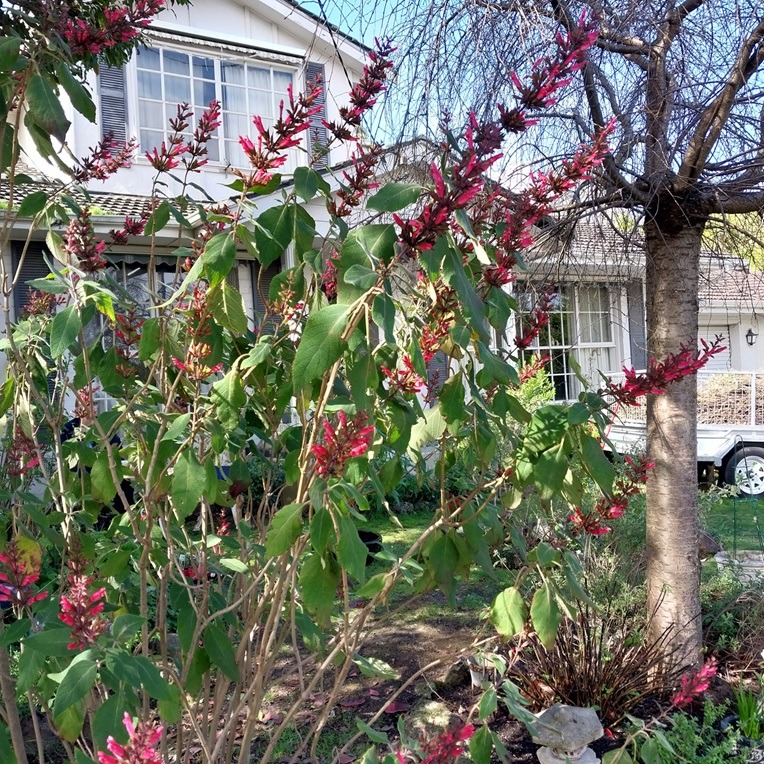
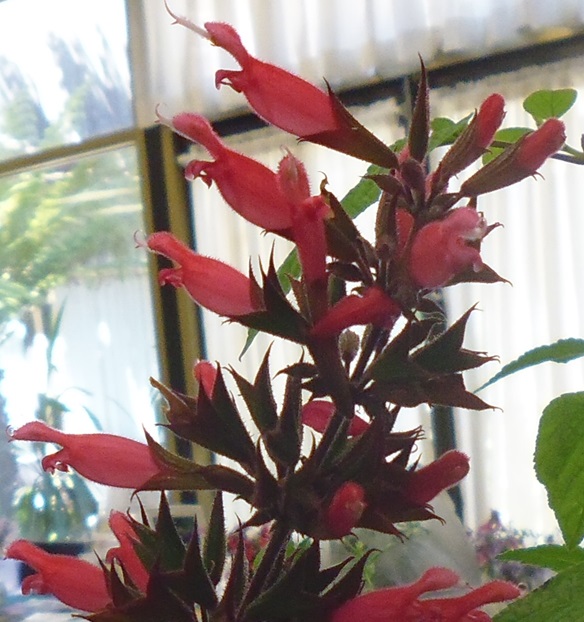
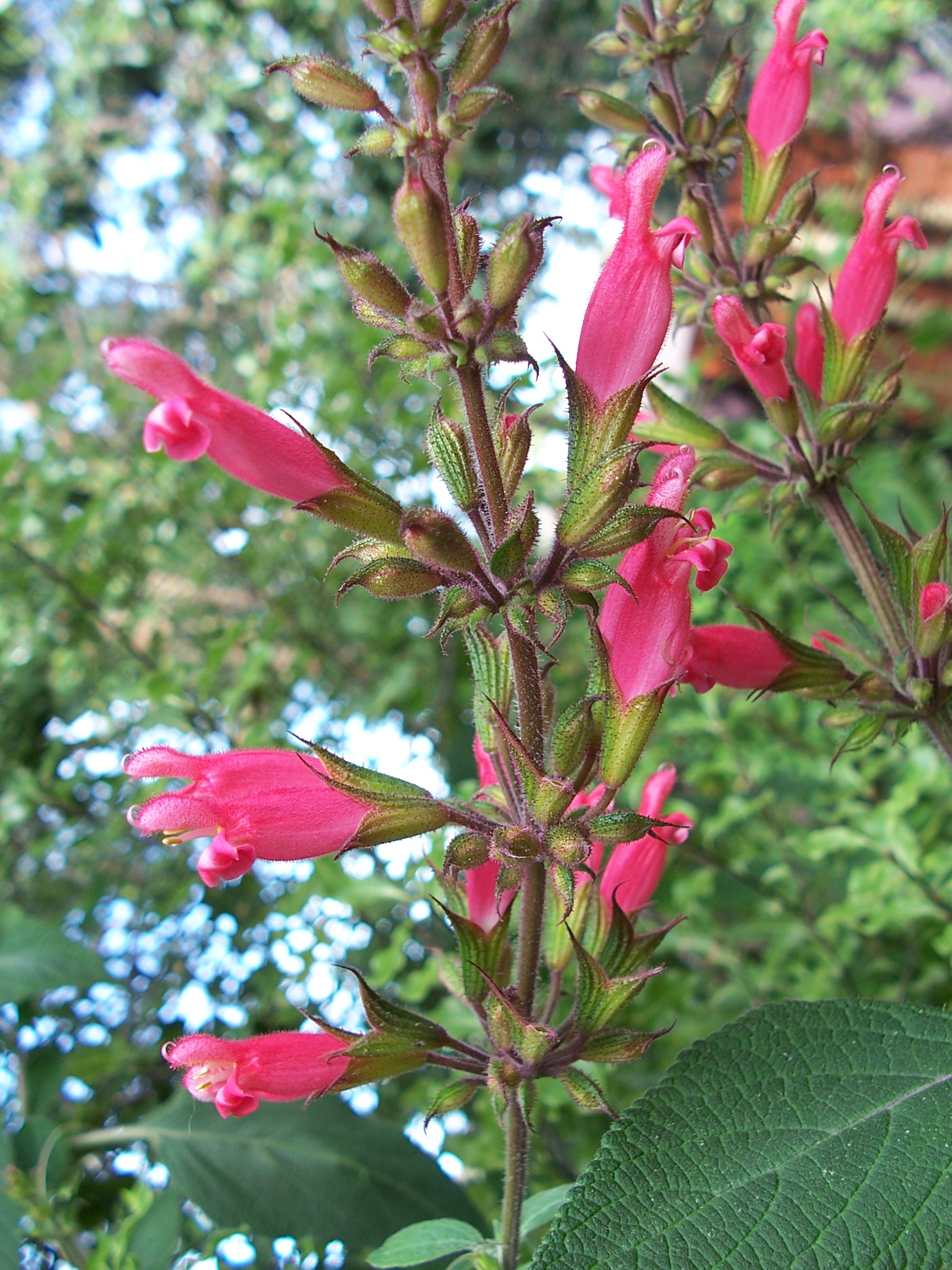
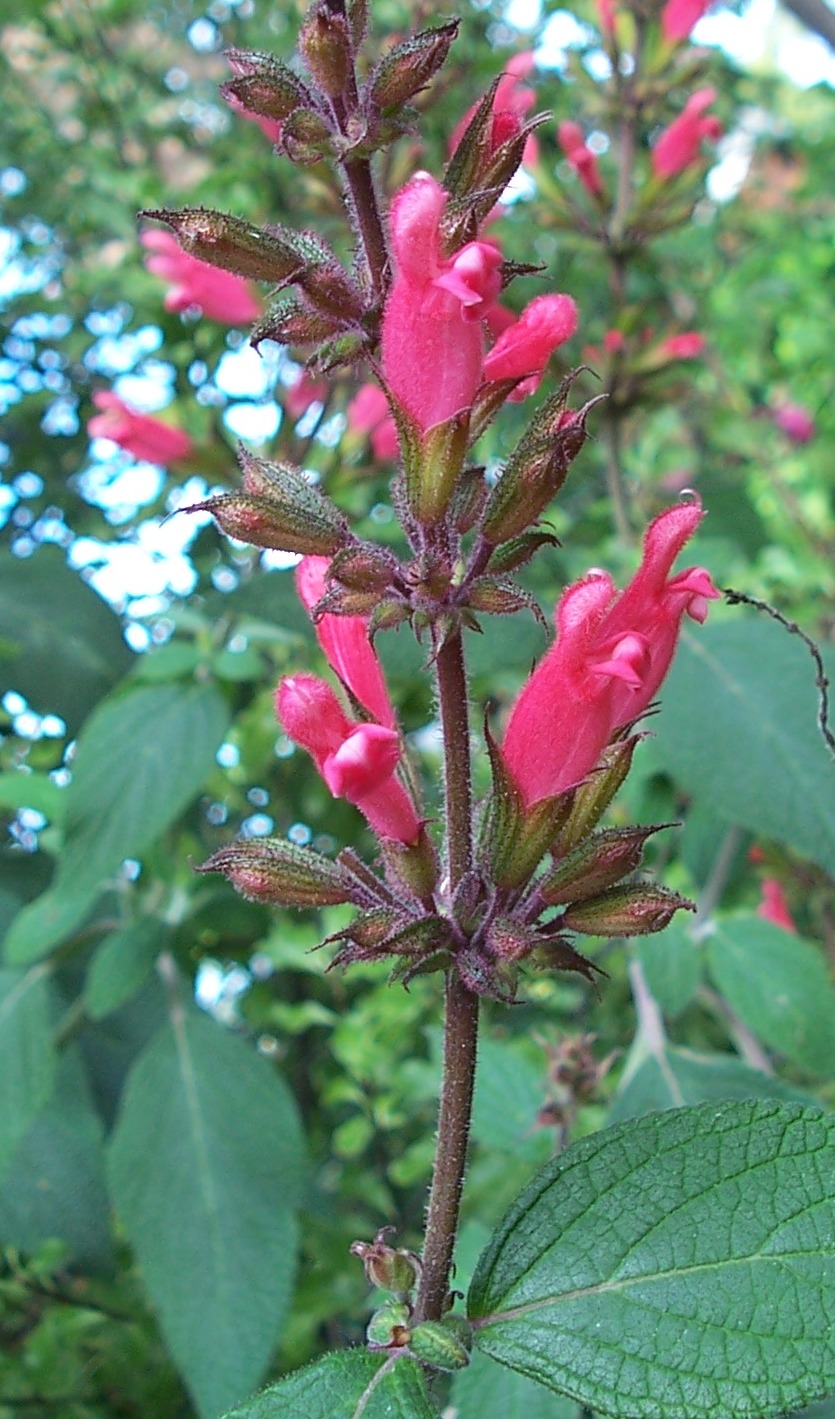
Flowers: are tubular, a watermelon colour, set in 3 tiers/layers in dense whorls around the stem, so when one tier is finishing, another is just beginning to open; these do not open all at the same time, some are open, some are still in bud. This helps to prolong the long flowering time.
Inflorescences can reach20cmLong. Salvia karwinskii flowerheads begin with only a very small knob,( unlike S. involucrata ) instead having buds that expand and grow till the flowerhead reaches approx 20cm long. These flowers, similar to the S.involucrata, are mainly pollinated by birds, but other small insects do enjoy the flowers.
Flowers are found at the end of the flowering stem, well above the foliage to attract passing birds and pollinating insects
Calyces: are a crimson/brown,these are all the coloured hairs on the ribs, bracts and flower stem. Each calyx has long pointed lobes which can be curled at the tips. The flower bracts remain for a long time until the bottom layer has finished;many of bracts are curled at the ends, giving the appearance of a small lip.
The calyces remain on the stem until all the flowers have finished, then they gradually drop off leaving a long bare stem.
Leaves: are an elongated broad lanceolate shape,a greyish green colour,with a slightly hairy surface, and indented veins. The underneath is paler with white hairs that continue down the leaf stem and along the new growth stems. Petioles can have a slightly pinkish colour.
A distinct pleasant scent is given off when the leaves and inflorescence are rubbed or brushed against.
|
|
|
|
Salvia karwinskii is a wonderful sight when in flower.
Being a tall upright plant, this should either be planted at the rear of the garden bed, or in the middle of the bed or even as a stand along showy shrub. After forming a clump, this proves to be a good screening plant at the back of the bed or to screen out a building, to add height to a bed.
Having greyish leaves, it lends itself to be planted with other grey leaved or very dark leaved shrubs. It works well in the background of a grey bed as well as blending well with many native plantings
When established, this is a tough and hardy plant, being able to tolerate a lot more sun than the S.involucrata varieties.
Maintenance: it’s fairly easy to maintain. When the flowering is almost finished, then the old canes should be removed as well as any weak or stems that have crossed through the shrub. Prune back stems encouraging shoots to upwards, rather than outwards.
Propagation: tip cuttings can be taken at any time of year. New shoots are best