
Salvia involucrata spp: is a tall shrub 3-4mH with arching stems and dense cerise flower heads in winter. Plant in semi shaded area.
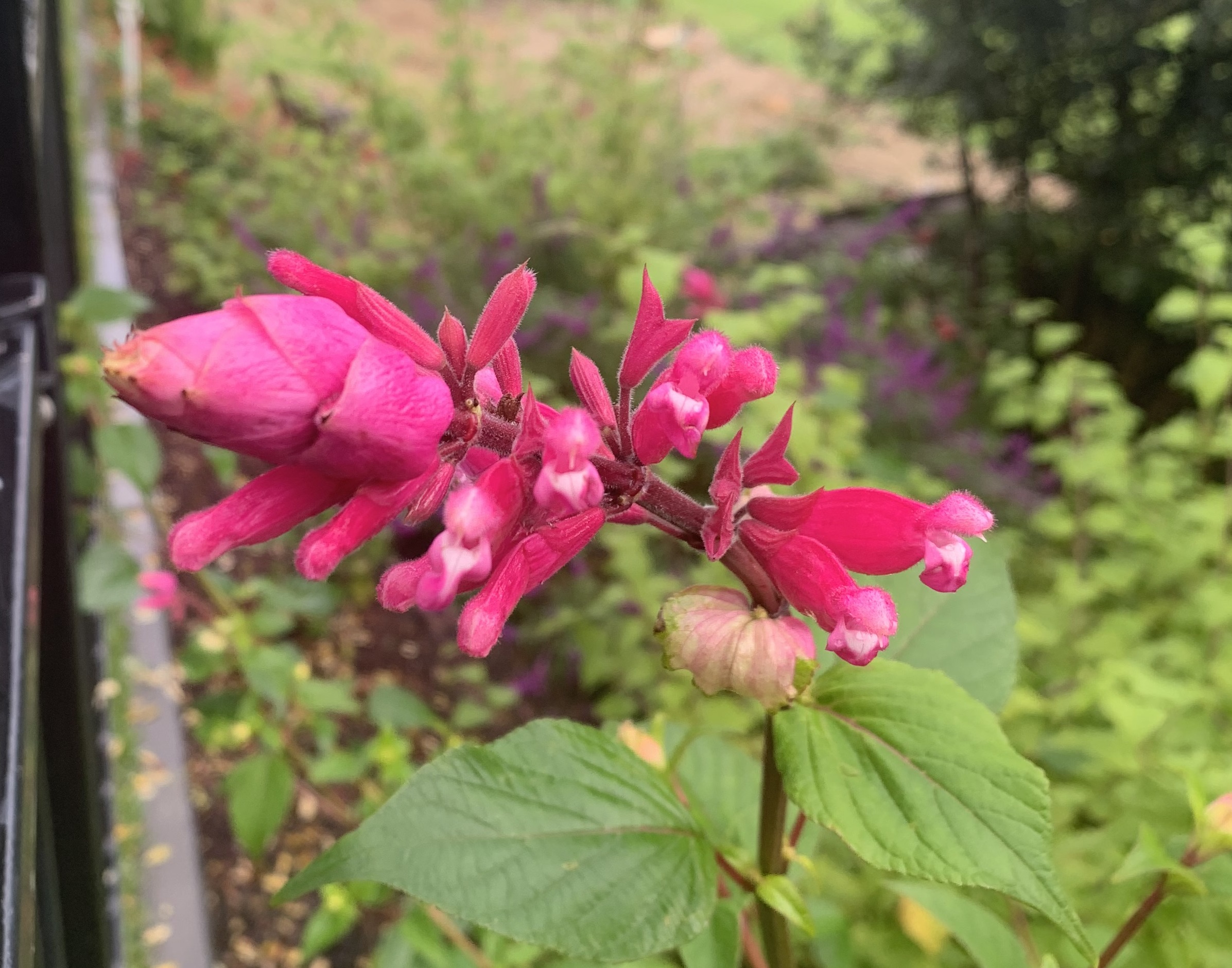
Salvia involucrata spp, is one of the major parents to many hybrids and crosses with Salvia karwinskii.
Flowers: this is a dense head of flowers that are held in a involucrote knob of bracts. This elongates gradually with the bracts falling away as more flowers unfurl until the whole inflorescence can measure 30cmlong.
Each flower is held in a whorl of 6 flowers around a crimson stem in 2 layers. The bottom flowers begin to open, while others are still in bud waiting to open. This method helps to prolongs the flowering period through the whole winter season.
The tube is cerise and wide, the hoods are small, almost triangular, white and covered with pink hairs. The lower lobes are a lovely cerise colour, curling back to show the large white beeline along the lobe trailing towards the throat. These flowers are usually visited by small honeyeaters with long thin beaks that can penetrate the tubular flowers.
These flowers begin to appear in late autumn, beginning of winter and will continue well into spring. As the stems are arching, all the flowers in the inflorescence, stand upwards towards the sun. They are held some distance from the foliage to attract and allow foraging birds access to the flowers.
Calyces and bracts: are both a lovely bright pink colour on pink petioles. The large bracts fall away when each whorl of flowers begin to unfurl. Calyces are ribbed with long pointed lobes. These fall off the stem as each flower finishes.
Leaves: are a broad lanceolate shape, mid to dark green, a smooth texture with veins are slightly indented and a pointed tapering tip, and edges being are entire. Most petioles are a dark pink colour.
|
|
|
|

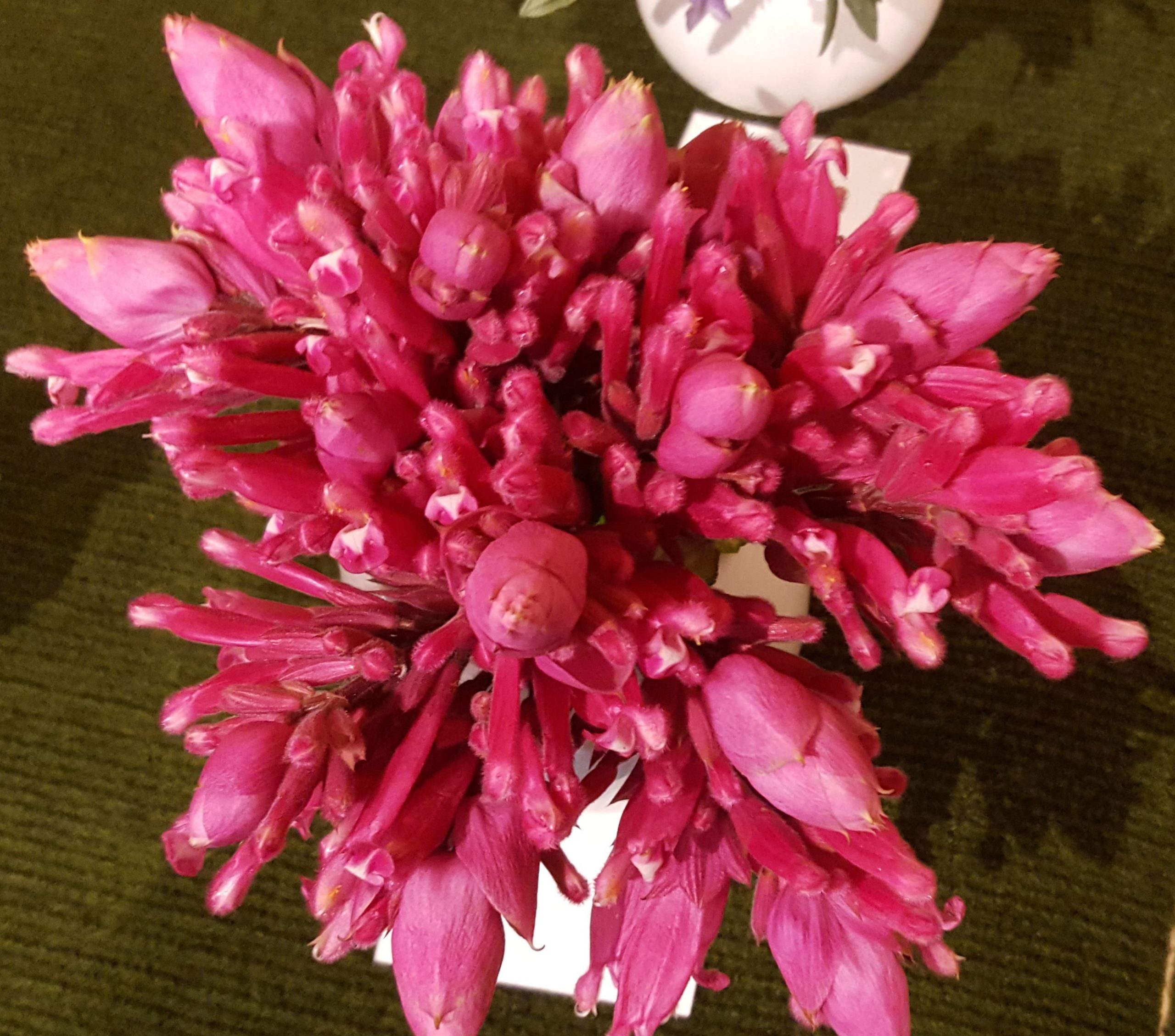
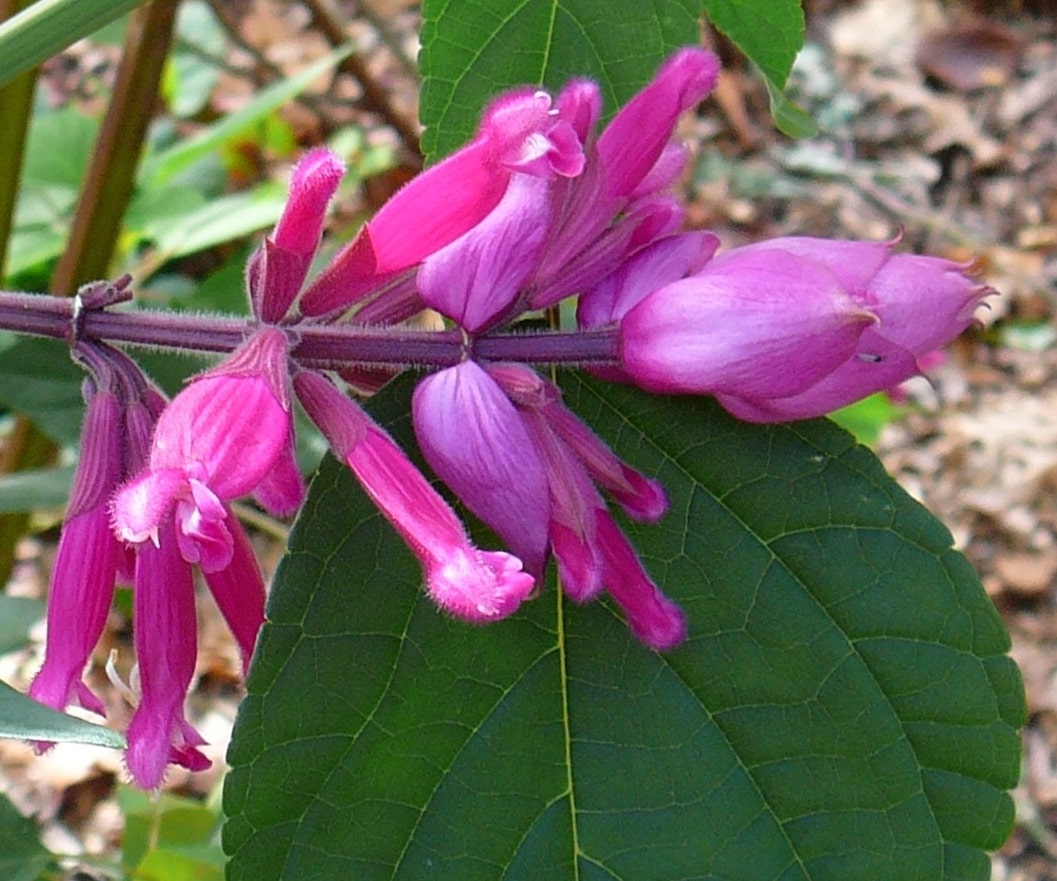
Salvia involucrata provides a lovely bright flowering shrub during the dull winter months.
As this shrub has arching stems, it is best to grow this large shrub at the rear or middle of the bed, so the stems can reach upwards and forwards, to be seen. Plant this with other large shrubs or smaller dense shrubs to accentuate the beautiful arching stems.
Plant in a sunny or dappled shaded area protected from harsh winds and frost. This is a frost tender shrub. Although this shrub likes semi shade, it will grow in a sunny area, provided it is well mulched to keep the root area cool and given extra waterings in the hot dry summer season.
Maintenance: Mulch well over the summer months to keep the root area cool. When the flowers have almost finished and new growth has appeared at the base or along the stems, then the large thick old stems can be removed, to allow the new growth room to grow.
Feed well when coming into bud in early autumn and again during the flowering season.
Propagation: tip cuttings taken of new growth, of 10-15cm long at any time of year. These should be held in a shaded area until stabilised as young growth can be very tender. See propagation page for more tips on how to take cuttings.