
Salvia ‘Appleblossom’: is a small shrub, 60cmH with cream and pink flowers through most of the year. grow in a sunny position.
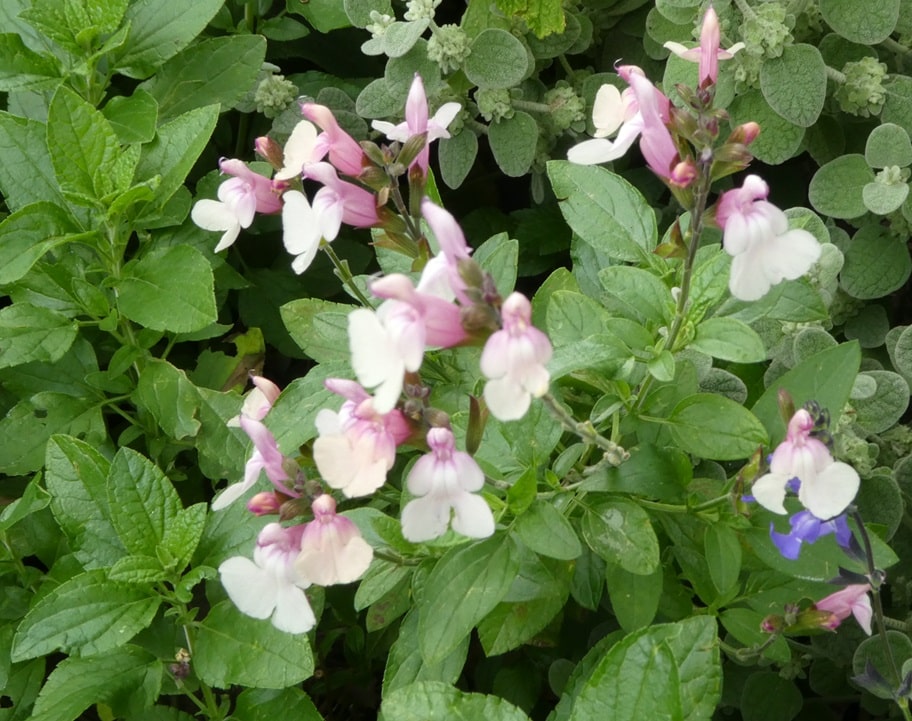
Salvia ‘Appleblossom’ is similar to S. ‘Candleglow’ but has different leaves.
Flowers:are a greggii/microphylla type arrangement with a pink tube, bleeding into the pale cream/ white lower lobes. The hood is white with pink hairs, leading down to the throat. The 2 side lobes may have some pink, but are mainly white, being tucked in beside the white middle lobe, that may be slightly parted. Buds are various shades of pink and white.
Most flowers are held in small clusters of 4-6 flowers at the end of the flower stem, above the foliage to attract passing bees or pollinating insects.
Flowering begins in spring and continues throughout the summer season into autumn and occasionally into the winter months. This would continue if the plant wasn’t cut back in autumn/winter, being able to flower for most of the year.
Calyces: are primarily green, with some olive colouring. Lobes are ribbed and well pointed. If the flower is not pollinated, the calyces will drop off, leaving a small green flower stem. If pollinated, the calyces usually become straw coloured and remain until knocked off.
Leaves: are a lovely bright midgreen, a broad laceolate shape with a pointed tip. Veins can be easily seen with regular fine small crenulations around the edges. Most stems are well clothed, making a bushy shrub.
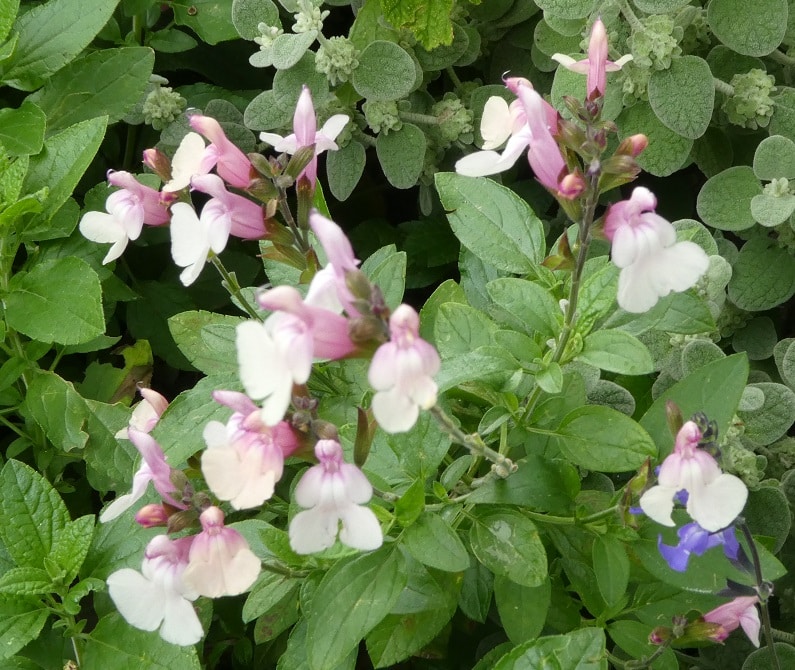
Salvia ‘Appleblossom’ makes a wonderful bright spot in any dull garden bed. Being a bicolour, it immediately draws your attention to this delicate looking flowering shrub.
‘Appleblossom’ was found in the garden of Lyndi Garnett
Plant in a sunny position with other pastel coloured small shrubs and perennials, grasses and either hedges or strappy plants at the rear of the bed. Looks great planted en mass as a feature plant or in a colourful mixed border.
Bees and small moths are especially attracted to this and other similar looking bicoloured Salvias.
Not fussy about soil, but should be well drained. Once established, this can be a tough, hardy plant for the summer season and winter months, even tolerating a light frost.
Maintenance: Give the shrub a light trim in summer, taking off most of the spent flower heads, which will encourage another flush of flowers, this also allows you to shape the plant if necessary.
In the autumn/winter months, it’s time to cut back properly and clean out, by cutting out any dead or twiggy stems. As new growth appears at the base of the stems, this new growth tells you where how far down to cut the stem. If there is little or no new growth further down, try and cut back to a good green bud.
If the plant has become leggy, with too much bare stem, then cut down by half to try and promote new growth, but always leave some green growth on at least one stem so the plant doesn’t go into shock and die.
Once the plant has been cut back, then feed well and mulch well to keep the root area warm over the cold winter months. Feed again just before the flowers begin and top up the mulch to keep the root area cool during the hot dry summer season.
Propagation: Tip cuttings can be taken at any time of year. See propagation page for more tips on how to take cuttings
‘Appleblossom’ was found in the garden of Lyndi Garnett